logo_elephant_odysseyIn May of this year, San Diego Zoo opened it’s complex Elephant Odyssey.  Incorporating a plethora of animal species revolving around the idea of extinction in California, the new exhibit zone presents a unique organizing element rarely seen in zoos: an abstract idea rather than biogeographic or Linnean systematics.  Animals as diverse as African lions, Californian condors, and South American capybaras find homes in the Elephant Odyssey, and although the cerebral organizing element is unique, it remains to be seen if it is successful. 

Let me break it down for you: California used to have a wide range of animals living on her land, but over time these species have become extinct.  However, sister species still exist elsewhere in the world, and here they are with graphic panels and sculptural representations of the now extinct counterpart.  Its strangeness may actually work to help make the story more clear–perhaps this jumble of seemingly unrelated animals will make people curious enough to actually read the panels for more information, and finally, the guests may walk away understanding a complex storyline related to their zoo experience.  But, maybe I’m overly optimistic.

eo elephant

From the photos I’ve seen, the Zoo decided to keep naturalism at a minimum, giving the place a clearly sterile, mechanized and utilitarian quality.  Of course, the exhibit is brand new and thus vegetation has not had a chance to grow in, but the prominence and visibility of barriers and other steely cold elements leads me to believe no amount of vegetation will ever create a natural environment throughout the Odyssey exhibits.  Perhaps the Zoo should’ve deleted a few species to subsidize a softer, more comfortable experience.

The Stats:

  • $45 million for entire exhibit area
  • 7.5 acres total
  • 35 species of animals
  • 2.4 acres of elephant habitat (including 137,000 gallon pool with 7.5′ deep end)
  • 7 elephants (1 African, 6 Asian, including one bull)
  • Brand new on-exhibit elephant care facility
  • Restaurant overlooking the elephants
  • Gift shop

Not sure if the $45 million also included their amazing exhibit website, but check it out here for more information.

elephant odyssey

dolphinThe Alliance of Marine Mammal Parks and Aquariums recently funded a study about guest perceptions of aquariums and zoos.  Among their many questions, the study sought to find out which animal had the biggest appeal to American aquarium visitors.  Dolphins came out on top with an outstanding 40% of the respondents naming them as their favorite.  Sharks came in a distant second, and killer whales, much to the chagrin of SeaWorld, came in nearly last.  Check out the study in more detail here.

IWRC_Top2AZA has not published the new husbandry guidelines for many species, and the previous guidelines were for mammals only.  The International Wildlife Rehabilitation Council has published their own set of husbandry guidelines specific to rehabbing wildlife.  However, these guidelines can be very useful, especially in reference to bird and reptile species, when programming exhibit spaces.  

Download the guide here, or check out the Resources tab on our website.

Through my work, I am always looking for resources explaining the simple basics of an exhibit for a specific species.  Recently, I stumbled upon the World Association of Zoos and Aquariums’ (WAZA) Virtual Zoo. 

WAZA 1

Here, you can search per species for info on exhibit sizing, husbandry, enrichment, and species behavior.  This is an excellent starting point or supplement to other exhibit resources.  Check it out here.   I’ve also added the link to my Resources page.

WAZA 2

Yes, folks, I know.  An aquarium is NOT a zoo, but unfortunately, ‘Zoo and Aquarium Review’ just doesn’t sound quite as snappy.  So, kind reader, we begin our new segment “Zoo Review” with a water zoo, the Mote Aquarium in Sarasota, Florida. 
Welcome to the Mote!  We're glad you found us!

Welcome to the Mote! We're glad you found us!

The Mote Aquarium is associated with the Mote Marine Research Laboratory, and as such has a few opportunities to view “behind the scenes”.  The Laboratory also allows for exhibits based on its rescue and rehab functions, showcasing rehabbed animals.  Despite these unique aspects, the Aquarium is, however,  simply a small, out-of-date institution. 

'Behind the Scenes at the Lab' Exhibit

'Behind the Scenes at the Lab' Exhibit

'Behind the Scenes at the Lab' Exhibit

'Behind the Scenes at the Lab' Exhibit

Overall, the Mote Aquarium feels incredibly sterile, with very little immersion and an amazing amount of concrete.  Despite the fact that it seems reasonably clean and well maintained (exception being water quality), the Aquarium feels extremely out-of-date and generally dismal.  Additionally, the Aquarium is supposedly divided into thematic or conceptual galleries, however, it is completely unclear where one area starts and another stops (except when you are lost down an endless hallway or parking lot–more on this to come). 

Information, on the other hand, is overly abundant through larger than life graphic panels showing off lots of words.  These panels are apparently serving as the Aquarium’s theming.

CIMG2174

CIMG2171

CIMG2212

Another puzzling aspect is its division into three distinct buildings spread over a small campus.  Not only is it unclear which buildings are actually associated with the Aquarium (since the parking that sits central to the campus also serves a marina and bird sanctuary), it is unclear where to even purchase tickets and begin the experience. 

Sharks!

Sharks!

Sharks underwater viewing

Sharks underwater viewing

Yuck!

Yuck!

The species that should be the stand-out, hands-down star of the Aquarium, the Sharks, have two separate underwhelming tanks.  I’d give the Aquarium the benefit of the doubt with the water quality in the main tank, hoping perhaps they were having an off-day, but one look into the underwater viewing shows disgusting algae and debris floating around the bottom and growing on the walls.  The single underwater viewing area at this tank is horribly undersized for the amount of guests wanting to have a look and for the size of the tank. The above water viewing feels like a back-of-house area that you’ve accidentally stumbled upon.  This covered outdoor exhibit could be very interesting with only a few changes, but as it stands currently, it is simply a sad, dirty cage. 

Overwater viewing

Overwater viewing...seems much larger than it is

Another overwater viewing

Another overwater viewing

High tech bridge

High tech bridge

The second, much smaller shark tank has much higher water quality, and an attempt at rockwork and coral.  This is completely undermined by the sad state of the coral, however, as it appears to have been rubber stamped across the tank; only one kind of artificial coral was used, and the attachment points are painfully obvious.  Additionally, the lovely sandy bottom seems to have been over taken by invasive plastic marine plants. 

Smaller Shark Tank
Smaller Shark Tank
Plastic coral and plants
Walk from sharks to restaurant

Walk from sharks to restaurant

After finding our way through building one, housing the sharks and several smaller tanks, the gift shop and the kitschy 50s restaurant, we found ourselves back in the parking lot, wondering how to find the sea turtles, manatee, and dolphins.  After wandering around the parking lot for a while, we finally notice sea turtles and manatees painted onto the pavement, subtly guiding us across a busy street and into another building. 

Deep Sea Diner

Deep Sea Diner

Thank goodness-- they serve alcohol!

Thank goodness-- they serve alcohol!

We found the sign!

We found the sign!

Follow the manatees!

Follow the manatees!

We made it!  After we cross this fairly busy road...

We made it! After we cross this fairly busy road...

Here, we find a confusing mess of hallways and outdoor breezeways, and somehow manage to stumble upon the last few minutes of the dolphin show.  This show is an informal educational demonstration, but attracts hundreds of people, crammed around the metal railing of the rectangular pool. 

Dolphin Pool

Dolphin Pool

Dolphin Pool

Dolphin Pool

From what we saw, the dolphins demonstrate simple behaviors as an illustration of the training techniques used by the Aquarium.  After the show, we walked aimlessly around trying find an actual exhibit for the dolphins, or at least an underwater viewing panel.  Unfortunately,  none was to be found. 

Dolphin Show

Dolphin Show

Dolphin Show

Dolphin Show

Dolphin enjoying enrichment!

Dolphin enjoying enrichment!

This building also houses the sea turtle rehab tanks which are about as exciting as they sound.  Several elevated concrete tanks are squeezed into a small room, carefully watched over by several docents.  A friendly sign across the room indicated the sea turtles are getting a new home, however, as a new sea turtle exhibit is currently being built.  I’d like to get back to see that, as it seems it will be the only new exhibit built at this Aquarium in years.

Sea Turtle Room

Sea Turtle Room

More Turtles

More Turtles

Turtles!

Turtles!

New Exhibit Coming Soon!

New Exhibit Coming Soon!

Finally, the manatees.  In true Mote form, the manatee exhibit is a concrete box.  This does not offend me as much as the water quality in the box.  The water was so murky the manatee itself bumped into the window once or twice as we stood there.  Although it appeared an additional pool, perhaps a holding or med pool, was adjacent and available to the manatees, the exhibit pool was very small for two critters.  Three large windows allowed plenty of viewing, but the glare from the surrounding exterior windows, with some help from the  milky water, made it nearly impossible to enjoy.  Add the tiny pool, and the overall experience was rather depressing.

Manatee Exhibit
Manatee Exhibit
Manatee at window
Manatee at window
Cloudy water and natural light equals "Is that the manatee?"
Cloudy water and natural light equals “Is that the manatee?”

Overall, the Mote needs some help.  Understanding that replacing and rebuilding exhibits is an extremely expensive process, I’ve put together the following Top Tips for the Mote Aquarium to increase its appeal and guest experience:

1.  Clean up / Fix up!

This is the easiest and, surprisingly, sometimes, the most effective way to have immediate impact on the guest experience.  Throughout the Aquarium,  water quality was dank, acrylic was scratched, and signs were fading and falling apart.  Take a few months and several thousands of dollars, and truly dedicate all resources to fixing and cleaning those things that are failing, or generally dingy.  Fresh coats of paint in warm neutrals and soft earth tones, rather than the primaries, cool greys, and every-shade-of-blue-known-to-man currently used, would also quickly update the Aquarium into at least the year 2000. 

Moisture damage all along lower half of sign

Moisture damage all along lower half of sign

Scratched up wall with laminated poster

Scratched up wall with laminated poster

Scratches on acrylic can be buffed out

Scratches on acrylic can be buffed out

Additionally, make an effort to hide items that should be out of sight to guests, ie skimming nets, hoses, food buckets, as they were seen sitting in plain sight in several places.  Buy a simple Rubbermaid closet and throw the junk in there!

Supplies on a wall near the sharks.  This is not Theming!

Supplies on a wall near the sharks. This is not Theming!

2.  Invest in CLEAR Directionals

Understanding that a small aquarium generally serves a repeat customer base can mean the Mote Aquarium may be under the impression that directionals are not as needed as at, say, SeaWorld, which caters predominantly to tourists.  However, without seeing their attendance demographics, I’d wager a bet that the Mote, being located where it is in Sarasota, Florida near a tourist shopping destination, is actually catering more to tourists than locals (or at least equally so).  This means a large portion of the guests have never been to the Aquarium, and will, as we did, get lost and frustrated trying to locate a) the entry and b) the dolphins, sea turtles, and manatees, among other things.  Mote, please, do yourself a favor…invest in signage, paving, and landscaping to help better direct your guests.  And, take advantage of the walk between buildings with educational interpretives, or even just a dolphin topiary or two!

3.  Invest in your possible Star Species

If you have little money, but want to increase attendance, profit or guest experience, always, always choose a star species to add / redesign / renovate.  The star is marketable, even if the project is simply giving the animals a new home.  Marketability means people will come, people will spend money on plush, people will tell their friends. 

This may seem greedy, but what it means is an increase in revenue and hopefully profit, which means an ability to spend money on less marketable species who are really needing new homes, too. 

Who am I suggesting for the Mote?  Sharks!  Sharks are the dangerous darlings of the sea.  People love sharks; adults and kids alike are drawn to the allure of the elusive grey ghosts and respond to the element of fear instilled by the animals.  Plus, renovating or adding to the dolphins doesn’t make sense as they are already the Stars of the Aquarium, and guests are more than willing to make the trek to see them.  Why not reward the guests for exploring the first building by elevating the sharks to Star status, then a Star species would anchor both buildings.  Spend some money on this exhibit , Mote (How much you ask?  Between $5 and 10 million), and I promise, you will see immediate results.

Mote Aquarium Overall Score:

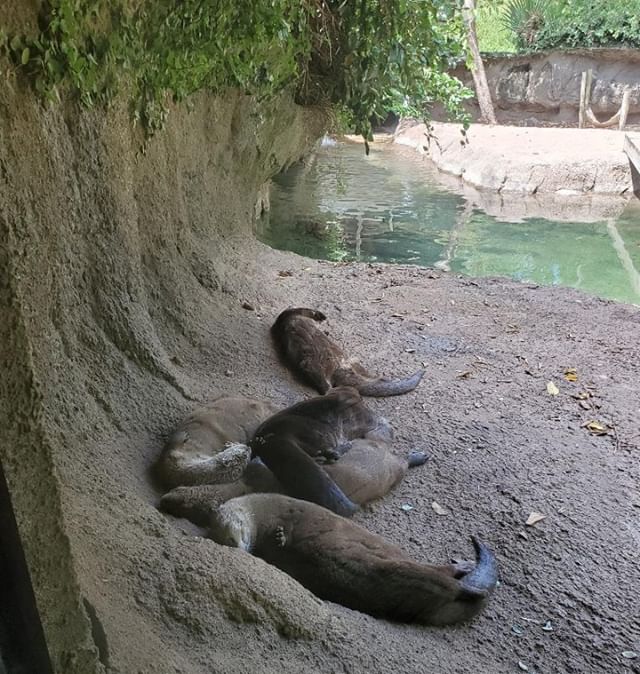
2 out of 5 otters

2 out of 5 otters

It doesn’t exactly roll off the tongue, but multi-disciplinary integration in tourism attractions continues to roll forward as a newly emerging trend.  Discussed before purely as the evolution of ’science-based institutions’, this trend is finding its way into all forms of tourism destinations. 

An aquarium at Atlantis Dubai

An aquarium at Atlantis Dubai

Consider Atlantis Resort in the Bahamas and Dubai.  Not only are these places  over the top resorts with beautiful beaches and luxurious appointments, but they’ve integrated a themed water park as well as an aquatic life park into their campuses.  Aquariums are found throughout the properties, and not just typical ho-hum aquariums either; we’re talking Aquarium! aquariums.  Much like Discovery Cove, visitors can take part in swimming with dolphins as well as enjoying other animal attractions, such as a shark tank and jellies.  They’ve taken a resort and integrated a science-based institution.  However, Atlantis is not the focus of this post. 

Waterslide through shark tank at Atlantis Bahamas

Waterslide through shark tank at Atlantis Bahamas

Recently, in my work, we’ve been spending a lot of time making fun and beautiful places without stepping back to realize what it is we’re really doing; without taking time to truly translate our actions into theory from which everyone in our profession can learn.  That is what this post is about.  Refreshing our memories about multi-disciplinary integration. 

Museum of Life and Science in Durham, an example of a truly multi-disciplinary institution

Museum of Life and Science in Durham, an example of a truly multi-disciplinary institution

Its happening all around us.  Theme parks more seriously integrating conservation issues.  Zoos incorporating science-center interactives which are about more than just the size of a polar bear’s paw.  Aquariums introducing land-based animal habitats.  Subtle changes, yes, but all moving toward the ultimate in end goals…creating a one stop shop for science, education, AND entertainment.  However, in the end, I do believe these institutions will filter out into two sects: those based on science and education (ie zoos and aquariums now), and those based on play (ie theme parks and children’s museums now). 

Brookfield Zoo's Hamill Family Play Zoo, where kids use role-play to learn and have fun!

Brookfield Zoo's Hamill Family Play Zoo, where kids use role-play to learn and have fun!

Some thoughts on what we’ll see in the coming years:

  • Zoos (and possibly aquariums) utilizing gentle, family ride systems to introduce new ways to experience animals
  • More Atlantis-style resorts with focus on conservation and local habitats, including breathtaking animal habitats presented in ways not seen in zoos and aquariums
  • Science centers across the board becoming Life Science centers by including animal exhibits
  • Theme parks spending millions to incorporate Educational elements, either as stand alone attractions or as enhancements to rides and shows
Asian Bamboo Gardens at Jacksonville Zoo

Asian Bamboo Gardens at Jacksonville Zoo

Jacksonville Zoo recently opened a new attraction, Asian Bamboo Garden, being touted as a ‘garden’ first, and ‘exhibit’ second.  The attraction features nearly 2.5 acres of Asian gardens, with a small Komodo dragon exhibit tucked away into one corner.  The Zoo focused on botanicals for this project, rather than zoological.  This is rather extraordinary, if you think about it.  Concept design always begins with the question: What’s marketable?  Projects are built to get folks through the door.  Jacksonville is saying with this project, gardens are profitable.  Generally, to me, zoos that call themselves ‘zoos and botanical gardens’ do so simply because they have beautiful grounds, not because they ever intend to add new attractions based on gardens.  However, Jacksonville Zoo and Botanical Garden has done just that, truly illustrating a multi-disciplinary integration in the direction of science.

Columbus Zoo's Boat Ride

Columbus Zoo's Boat Ride

And, finally, Columbus Zoo. Through a series of moves that appears to be an effort to shift almost 180 degrees from a science-based institution into a mini-resort, the Zoo has announced the initiation of a feasibility study on adding a hotel to the already massive complex.  Recently, the zoo added a golf course and a water park (check out their fun website).  Considering the Zoo is actually a zoo and an aquarium, the complex is quickly becoming a major multi-disciplinary destination, with the focus shifting from science to play.  Columbus Zoo again illustrates the emergence of multi-disciplinary integration. I’m extremely confident that as we move forward in the evolution of science-based institutions, we’ll see many, many more of these kinds of integrations.

As I’ve posted in the past, elephants at zoos have been the target of much controversy in the recent years.   Dallas Zoo recently fought public outcry to keep their lone elephant, and Chicago residents have been fighting to essentially outlaw elephants in captivity within the city limits. 

Billy in his current home

Billy in his current home

Now, the Zoo has announced it will continue the exhibit construction, against dissenting opinions.  It will become one of the over 60 zoos in the country to make the decision to keep their elephants, renovating their current exhibits or adding entirely new ones.

The new exhibit will be world class, promises the Zoo.  At over 3 acres of animal space, it would be one of the largest in the nation.   The Zoo plans on adding 3 females to make a 4 animal herd. 

New exhibit plans

New exhibit plans

Now, Los Angeles joins the spotlight, as the Zoo here has decided to keep its lone bull elephant, Billy.  Due to the star-studded cast of  outspoken animal activists, the Zoo halted construction on the elephant’s new enclosure in order to re-evaluate its plans, and to hear dissenting opinions.  At the stoppage, approximately 30% of the project was complete.

Good luck to all involved in this brave project!

Just about every time we start a new master planning project, we ask ourselves, “What are our guests’ favorite animals?”  Finally, we’ve decided to find out for ourselves. 

Knowing the popularity of an animal helps designers plan parks by understanding which animals will act as draws for guests through the site.  It also helps the parks prioritize implementation of renovations and/or additions of new animals to take full advantage of revenue and admissions increases.

Be a part of helping plan future zoos, theme parks, and aquariums by letting us know which is your favorite animal!

Designed by Studio Hanson Roberts, the new exhibit to open in May of this year, features green technologies and themed design.  The penguins’ new home will be outdoor, and features 30′  of underwater viewing. 

The commendable  plan for the exhibit includes heating/cooling the exhibit pool through geothermal wells, and water filtration through a combination of traditional filters and Living Machine-type natural filtration.  The water volume will be supplemented as needed with rainwater collected from back of house roofs. 

wpz-penguins-1

wpz-penguins-3

wpz-penguins-21wpz-penguins-4

From Albuquerque, NM:


From Reuters:

“Zoos Lack Funds to Inspire Obama’s Future Scientists


From Wildlife Conservation Society, New York:

Next Page »